08 / Add-On / Diagnostics

Sewer Scope Inspection

A sewer scope inspects the lateral sewer line from the house at or close to the foundation out to the city sewer, HOA tap or septic tank. We run a camera through the line to see cracks, bellies, damage, clogs and debris, and save you thousands of dollars before you buy.

01

What a sewer scope actually is

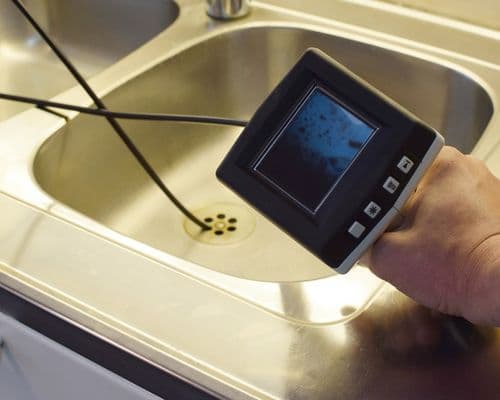
A push camera enters through the exterior cleanout and travels the full length of the lateral, recording as it goes. Nothing is excavated and no yard is dug up. That is the entire point. The camera shows the inside of the line so you can see its condition rather than guess at it, and the recording is delivered with your report.
02

Why you need one

A broken or damaged sewer line costs homeowners thousands to repair, and it is not covered by a standard homeowners policy. Finding the problem before closing is the difference between a negotiation and a bill. If serious issues turn up, we tell you plainly what we saw and what it typically takes to correct, so you can address it before the sale or price it into the deal.

03

Why it matters in South Florida specifically

Cast-iron drain lines were standard here through the mid-1970s, and they corrode from the inside out until they scale, restrict and eventually collapse. Older neighborhoods across West Palm Beach, Lake Worth Beach, Riviera Beach and Delray Beach are full of them. The mature root systems that make those streets desirable are the other leading cause of lateral failure.

What’s Included
  • Full camera run from the cleanout to the city, HOA tap or septic tank
  • Recorded video delivered with your report
  • Root intrusion and pipe damage identified
  • Bellies, offsets and blockages documented
  • Piping material and condition assessed
  • No excavation and no digging in your yard
What's included?

Sewer Scope Inspection: what we evaluate.

The most common cause of water damage. As pipes age and wear, they crack and break, and water begins seeping out. In a buried lateral the leak is invisible from inside the house: the first symptom is often soggy ground, a sinkhole in the yard, or a slow drain that never quite clears.

A low spot where the line has settled and no longer drains by gravity. Waste and water sit in the belly instead of flowing through, which causes repeat backups and accelerates corrosion at that point. Bellies are one of the clearest things a camera reveals and one of the most expensive to correct.

Corrosion occurs where metal comes into contact with water and oxygen. Rust develops on the pipe wall, and once rusted the pipe cannot hold its shape properly and begins to leak. Cast iron scales inward until the effective diameter of the line is a fraction of what it was.

Cracked or loose fittings where two pieces of pipe connect. Loose fittings let water escape into the surrounding soil; cracked fittings prevent water flowing smoothly and create gaps. Offset joints, where sections have shifted out of alignment, catch debris and start blockages.

Connections are the weakest link in the system and usually the first thing to fail as pipes age. They are also where transitions between piping materials occur, clay to PVC, cast iron to PVC: which is exactly where a camera earns its cost.

Obstructions that block flow, from grease and debris to tree roots that have found a joint and grown into the line. Roots are the single most common cause of lateral failure in established neighborhoods, and they return unless the entry point is repaired rather than just cleared.

Want to see the finished product? Look at a sample report.

Save yourself thousands before you buy.

A full lateral replacement runs into five figures, and more if the line runs under a slab, a driveway or mature landscaping. It is not covered by a homeowners policy. A scope before closing is one of the highest-return decisions in the entire due-diligence process.

Schedule Your Inspection→
Sewer scope camera inspection of a lateral line

Let’s get you scheduled and get you the answers you need.

Office hours: Mon-Sat 8:30am-8pm, Sun 9am-6pm · FL Licensed and Insured · Palm Beach, Martin, St. Lucie & North Broward Counties